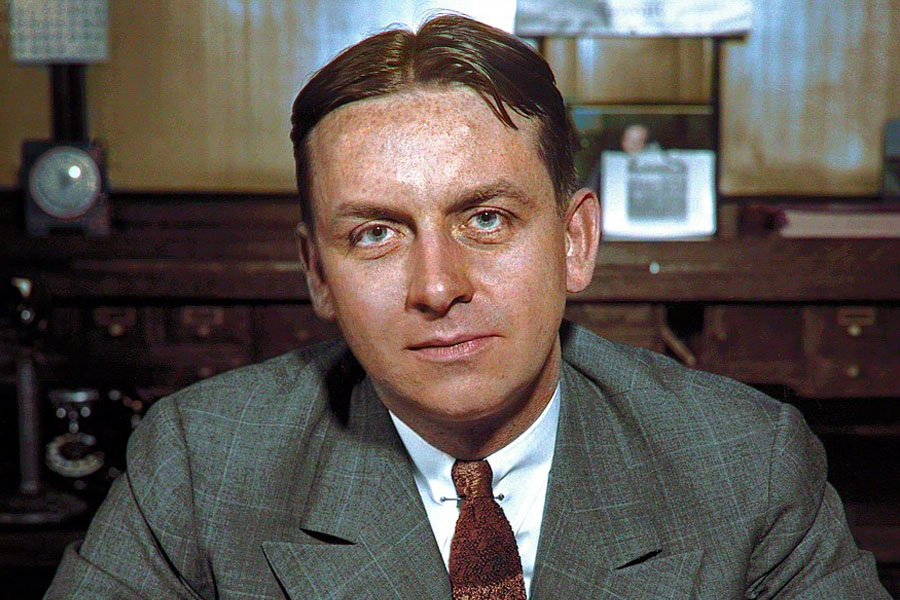
When I study the life of Elliot Ness, I see far more than the famous leader of The Untouchables. I see a determined public servant shaped by hardworking immigrant parents, strengthened by education, challenged by personal setbacks, and remembered for changing the standards of American law enforcement. His story is one of courage, discipline, ambition, and resilience. Like a lighthouse standing against relentless waves, Ness became a symbol of integrity during one of the most turbulent periods in United States history.
Basic Information
| Category | Details |
|---|---|
| Full Name | Elliot Ness |
| Birth Date | April 19, 1903 |
| Birthplace | Chicago, Illinois, United States |
| Death Date | May 16, 1957 |
| Age at Death | 54 |
| Nationality | American |
| Education | University of Chicago |
| Occupation | Law Enforcement Official, Public Safety Director |
| Famous For | Leading The Untouchables |
| Parents | Peter Ness and Emma Ness |
| Spouses | Edna Stahle, Evaline Michelow Ness, Elisabeth Andersen Seaver |
| Child | Robert Ness (Adopted) |
Early Life and Education
I find Elliot Ness’s childhood especially meaningful because it reflects the classic American immigrant experience. He was born on April 19, 1903, in Chicago, Illinois, as the youngest of five children. His parents, Peter Ness and Emma Ness, had immigrated from Norway and built a modest but stable life by operating a neighborhood bakery.
Growing up in a household where hard work was expected every day helped shape his character. The bakery represented more than a family business. It became a classroom where discipline, responsibility, and perseverance were taught without lectures.
Ness attended Christian Fenger High School before enrolling at the University of Chicago. He graduated in 1925 with studies in political science and business administration. During his university years, he became interested in modern policing and scientific methods of criminal investigation. Those ideas later influenced nearly every leadership position he held.
The Rise of a Federal Investigator
Elliot Ness joined BOP in 1926. Prohibition, a nationwide ban on alcohol, was in effect in the US. Few crooks were more powerful than Al Capone during this time.
Ness handpicked a small squad of reliable FBI agents. Their trait was basic but remarkable. They resisted bribery.
They were called “The Untouchables.” for their dedication.
Instead of dramatic shootouts, the team used intelligence, monitoring, and systematic raids on illegal breweries and transit networks. They undermined Capone’s bootlegging business and exposed Chicago’s criminal underworld.
Ness became a famous law enforcement figure even though Capone was convicted of tax evasion, not bootlegging.
Transforming Public Safety in Cleveland
In 1935, Elliot Ness accepted a new challenge by becoming Public Safety Director in Cleveland, Ohio.
I think this period deserves as much attention as his Chicago years because it demonstrated his abilities as an administrator rather than simply an investigator.
His responsibilities included overseeing both the police and fire departments. He introduced numerous reforms, including:
- Merit based promotions
- Professional training
- Improved investigative procedures
- Modern traffic safety programs
- Anti corruption initiatives
- Better coordination between emergency services
These reforms reflected his belief that effective policing required professionalism instead of political influence.
His time in Cleveland was not without criticism. The infamous Cleveland Torso Murders occurred during his administration and remained unsolved. Although historians continue debating his handling of the investigation, his broader administrative achievements remain significant.
Federal Service and Later Career
Ness worked in Washington, D.C., on federal projects to eliminate prostitution around military bases and enhance service member public health during World War II.
His private business career began after government service. He worked for Diebold, Guaranty Paper, electronics, and frozen food companies.
Unfortunately, his business career never matched his law enforcement accomplishments.
Financial problems recurred in his later years. Despite his national fame, he struggled economically and worked in numerous businesses while writing his memoir.
Elliot Ness, 54, died of a heart attack on May 16, 1957.
Family Members Who Shaped His Life
Family remained an important foundation throughout Ness’s life, even as his demanding career often placed enormous pressure on his personal relationships.
Peter Ness
Peter Ness was Elliot’s father and one of the strongest influences on his character.
Originally from Norway, Peter immigrated to the United States seeking greater opportunity. Together with his wife, he operated the family bakery in Chicago for many years.
His example demonstrated the value of persistence, honest labor, and personal integrity. These qualities became deeply rooted in Elliot’s own personality.
Emma Ness
Emma Ness devoted herself to raising five children while helping manage the family business.
She created a stable home environment centered on education and responsibility. Her encouragement supported Elliot throughout his school years and helped prepare him for university.
Emma represented the quiet strength often found behind remarkable public figures.
Edna Stahle
Edna Stahle became Elliot Ness’s first wife in 1929.
Their marriage coincided with the years when Ness gained national attention for his work against organized crime. Constant public attention, long working hours, and the pressures of government service gradually strained the relationship.
The marriage ended in divorce in 1938.
Evaline Michelow Ness
In 1939, Ness married artist and illustrator Evaline Michelow.
The couple experienced frequent changes as federal assignments required relocations and demanding schedules. Their different lifestyles eventually contributed to growing distance within the marriage.
They divorced in 1945.
Elisabeth Andersen Seaver
Elisabeth Andersen Seaver became Elliot Ness’s third wife in 1946.
She remained with him throughout the final chapter of his life, including years marked by financial difficulties.
Her support proved especially meaningful as Ness completed work on his memoir. After his death, she helped preserve his legacy by supporting publication of his writings.
Robert Ness
Robert Ness was adopted by Elliot and Elisabeth in 1946.
Unlike his famous father, Robert lived largely outside the public spotlight. Historical records reveal relatively little about his personal life, reflecting the family’s desire for privacy.
Although public attention focused almost entirely on Elliot Ness, Robert remained an important part of his family story.
Achievements That Defined His Legacy
Elliot Ness’s career had multiple highlights.
He built one of the best federal anti-corruption squads.
He dismantled most of Chicago’s Prohibition-era underground booze economy.
Professional standards and organizational change improved Cleveland police administration.
He enhanced traffic safety, influencing public safety.
He proved integrity could be a business strategy, not just a virtue.
After his death, many books, TV shows, documentaries, and films told his narrative to new generations.
Personal Challenges Behind the Public Image
Heroes often get the spotlight while individual problems get ignored.
After leaving government service, Elliot Ness had repeated divorces, failed businesses, financial problems, and career failures.
I learned from his later years that famous people often endure concealed responsibilities. The man who fought corruption and organized crime also struggled with job, relationships, and finances.
His tale feels authentic because of that disparity.
Timeline of Major Events
| Year | Event |
|---|---|
| 1903 | Born in Chicago, Illinois |
| 1925 | Graduated from the University of Chicago |
| 1926 | Joined the Bureau of Prohibition |
| 1929 | Married Edna Stahle |
| 1930 | Began major investigations against organized crime |
| 1931 | The Untouchables became nationally famous |
| 1935 | Appointed Cleveland Public Safety Director |
| 1938 | Divorced Edna Stahle |
| 1939 | Married Evaline Michelow Ness |
| 1942 | Entered federal service in Washington, D.C. |
| 1945 | Divorced Evaline Michelow Ness |
| 1946 | Married Elisabeth Andersen Seaver |
| 1946 | Adopted Robert Ness |
| 1947 | Ran for mayor of Cleveland |
| 1957 | Died at age 54 |
FAQ
Who was Elliot Ness?
Elliot Ness was an American law enforcement official best known for leading The Untouchables, a federal team that fought organized crime during Prohibition. He later became Public Safety Director in Cleveland and introduced important policing reforms.
Who were Elliot Ness’s parents?
His parents were Peter Ness and Emma Ness, Norwegian immigrants who owned and operated a bakery in Chicago while raising five children.
How many times was Elliot Ness married?
Elliot Ness married three times. His spouses were Edna Stahle, Evaline Michelow Ness, and Elisabeth Andersen Seaver.
Did Elliot Ness have children?
Yes. Elliot Ness and Elisabeth Andersen Seaver adopted a son named Robert Ness in 1946.
What made The Untouchables famous?
The Untouchables earned their reputation because they refused bribes from organized crime while conducting investigations against illegal bootlegging operations during Prohibition.
What reforms did Elliot Ness introduce in Cleveland?
He promoted merit based advancement, improved police professionalism, strengthened anti corruption efforts, modernized investigative practices, and introduced innovative traffic safety programs.
Was Elliot Ness wealthy?
No. Despite his fame, he experienced significant financial difficulties during the final years of his life and never accumulated substantial wealth.
Why is Elliot Ness still remembered today?
He remains an enduring symbol of integrity, professional policing, and public service. His work against organized crime and his commitment to ethical law enforcement continue to inspire historians, writers, and readers around the world.